How To Check For Breast Cancer Female / Breast Cancer Awareness Symptoms Diagnosis And Treatment / Family history of breast cancer increases the risk of breast cancer, but the majority of women diagnosed with breast cancer do not have a known family history of the disease.
Dapatkan link
Facebook
X
Pinterest
Email
Aplikasi Lainnya
How To Check For Breast Cancer Female / Breast Cancer Awareness Symptoms Diagnosis And Treatment / Family history of breast cancer increases the risk of breast cancer, but the majority of women diagnosed with breast cancer do not have a known family history of the disease.. A 3d mammogram takes several pictures so your doctor can see your. Open to women nationwide between 40 and 74 who have not had breast cancer, the study evaluates two approaches to breast cancer detection: Mammography is the best tool doctors have to screen healthy women for breast cancer, as it has been shown to lower deaths from the disease. The national breast cancer foundation recommends a screening mammogram every one to two years for women aged 40 and older. All women have a level.
Breast cancer is the top cancer in women both in the developed and the developing world. While most breast changes won't be breast cancer, when it is, a woman noticing a potential symptom and getting this checked by the gp are often the first steps that lead to diagnosis. With the pads/flats of your 3 middle fingers, check the entire breast and armpit area pressing down with light, medium, and firm pressure. If you aren't already, be more breast aware. If you notice anything out of the ordinary, monitor it until after your next period.
Protection Breast Cancer Infographic Royalty Free Vector from cdn1.vectorstock.com Open to women nationwide between 40 and 74 who have not had breast cancer, the study evaluates two approaches to breast cancer detection: Your doctor will use a small needle to extract a sample of cells, without removing any tissue. Breast cancer is the top cancer in women both in the developed and the developing world. Be sure to use the pads of the fingers, not just the very tips. Breast mri is often recommended to high risk women in addition to mammography. Remember to check underarm and upper chest areas. Both an ultrasound and a mammogram are typically recommended to evaluate a lump in women who are over age 30 and not pregnant or breastfeeding. If you aren't already, be more breast aware.
Breast cancer is the top cancer in women both in the developed and the developing world.
Both an ultrasound and a mammogram are typically recommended to evaluate a lump in women who are over age 30 and not pregnant or breastfeeding. The national breast cancer foundation recommends a screening mammogram every one to two years for women aged 40 and older. Know what's normal for your breasts, like the way they look and. If your doctor finds an area of concern on a screening test (a mammogram), or if you have symptoms that could mean breast cancer, you will need more tests to know for sure if it's cancer. Most women with breast cancer in one breast will never develop cancer in the other breast. Most healthy adults should aim for at least 150 minutes a week of moderate aerobic activity or 75 minutes of vigorous aerobic activity weekly, plus strength training at least twice a week. Breast cancer lumps are typically harder than and separate from the tissue around them. Your doctor will use a small needle to extract a sample of cells, without removing any tissue. All women have a level. However, if there is a family history of breast cancer, the risk is doubled. Some warning signs of breast cancer are— new lump in the breast or underarm (armpit). Be sure to use the pads of the fingers, not just the very tips. The incidence of breast cancer is increasing in the developing world due to increase life expectancy, increase urbanization and adoption of western lifestyles.
Standard annual mammography versus a personalized approach that takes multiple risk factors into consideration, including genetic markers and breast density, to make a recommendation about when to start or stop and how often to screen for breast cancer, and what type of imaging to use. Another person in the uk is diagnosed with breast cancer every 10 minutes, so get checking, ladies. Breast cancer lumps are typically harder than and separate from the tissue around them. Some warning signs of breast cancer are— new lump in the breast or underarm (armpit). With breast cancer, there's a misconception that if you feel fine, don't have a lump, and have no family history of breast cancer, you're okay.
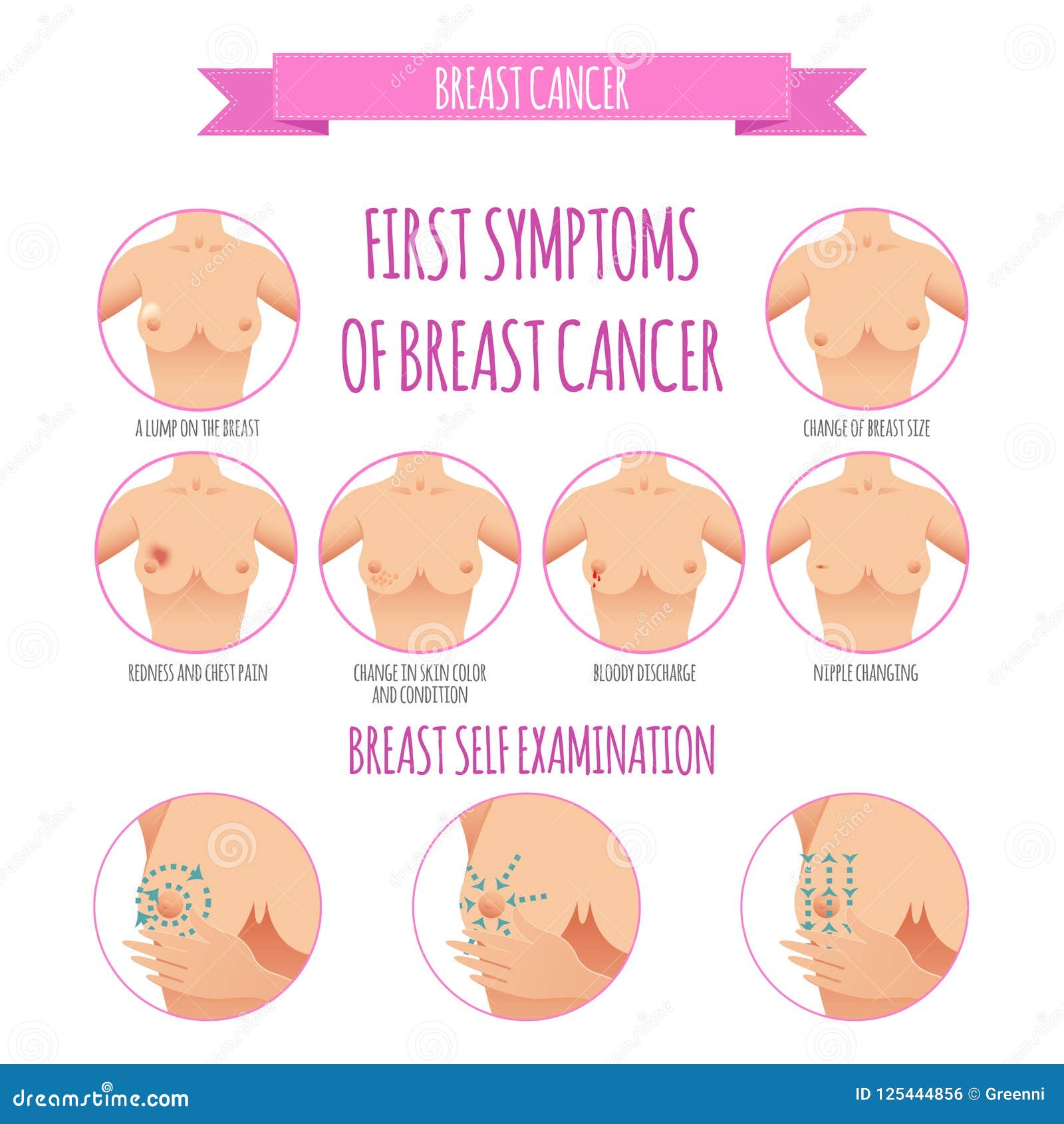
Self Exam With Cancer Anatomical Model Female Breast from thumbs.dreamstime.com Both an ultrasound and a mammogram are typically recommended to evaluate a lump in women who are over age 30 and not pregnant or breastfeeding. Breast cancer is the top cancer in women both in the developed and the developing world. Women with a family history of breast cancer are recommended to start breast cancer screening 10 years before the age of the relative's diagnosis for early detection. The survival rate is far higher for women who find breast cancer in the early stages, as it's easier to treat. With the pads/flats of your 3 middle fingers, check the entire breast and armpit area pressing down with light, medium, and firm pressure. If you aren't already, be more breast aware. With breast cancer, there's a misconception that if you feel fine, don't have a lump, and have no family history of breast cancer, you're okay. There are three common methods, line, circle, and wedge.
Thickening or swelling of part of the breast.
Your doctor will use a small needle to extract a sample of cells, without removing any tissue. Know what's normal for your breasts, like the way they look and. Women with a family history of breast cancer are recommended to start breast cancer screening 10 years before the age of the relative's diagnosis for early detection. American indian women and alaska native women have somewhat lower rates of breast cancer screening compared to black women and white women. With breast cancer, there's a misconception that if you feel fine, don't have a lump, and have no family history of breast cancer, you're okay. Remember to check underarm and upper chest areas. Thickening or swelling of part of the breast. Early breast development may be associated with breast pain, tenderness, and nodularity. If your doctor finds an area of concern on a screening test (a mammogram), or if you have symptoms that could mean breast cancer, you will need more tests to know for sure if it's cancer. Family history of breast cancer increases the risk of breast cancer, but the majority of women diagnosed with breast cancer do not have a known family history of the disease. Imaging tests to find breast cancer different tests can be used to look for and diagnose breast cancer. Screening guidelines may be suggested for women who have risk factors such as a brca1 or brca2 mutation, who are an untested family member of someone who has a brca1 or brca2 mutation, who have a history of mantle or chest radiation which occurred before age 30 years, or who have a lifetime breast cancer There are three common methods, line, circle, and wedge.
Early breast development may be associated with breast pain, tenderness, and nodularity. Both an ultrasound and a mammogram are typically recommended to evaluate a lump in women who are over age 30 and not pregnant or breastfeeding. The treatment of breast cancer in men follows the same principles of management as for women. Imaging tests to find breast cancer different tests can be used to look for and diagnose breast cancer. There are three common methods, line, circle, and wedge.
Checking For Signs And Symptoms Of Breast Cancer Breast Cancer Care from breastcancernow.org Screening guidelines may be suggested for women who have risk factors such as a brca1 or brca2 mutation, who are an untested family member of someone who has a brca1 or brca2 mutation, who have a history of mantle or chest radiation which occurred before age 30 years, or who have a lifetime breast cancer Most women with breast cancer in one breast will never develop cancer in the other breast. With breast cancer, there's a misconception that if you feel fine, don't have a lump, and have no family history of breast cancer, you're okay. Both an ultrasound and a mammogram are typically recommended to evaluate a lump in women who are over age 30 and not pregnant or breastfeeding. All women have a level. Be sure to use the pads of the fingers, not just the very tips. However, if there is a family history of breast cancer, the risk is doubled. Another person in the uk is diagnosed with breast cancer every 10 minutes, so get checking, ladies.
Early breast development may be associated with breast pain, tenderness, and nodularity.
Women with a family history of breast cancer are recommended to start breast cancer screening 10 years before the age of the relative's diagnosis for early detection. Mammography is the best tool doctors have to screen healthy women for breast cancer, as it has been shown to lower deaths from the disease. While most breast changes won't be breast cancer, when it is, a woman noticing a potential symptom and getting this checked by the gp are often the first steps that lead to diagnosis. All women have a level. The survey of 2,126 uk adults also revealed that a fifth of women (20%) say their main reason for not doing so is because they don't know how to check. Open to women nationwide between 40 and 74 who have not had breast cancer, the study evaluates two approaches to breast cancer detection: Family history of breast cancer increases the risk of breast cancer, but the majority of women diagnosed with breast cancer do not have a known family history of the disease. Thickening or swelling of part of the breast. There are three common methods, line, circle, and wedge. Imaging tests to find breast cancer different tests can be used to look for and diagnose breast cancer. If you aren't already, be more breast aware. The national breast cancer foundation recommends a screening mammogram every one to two years for women aged 40 and older. Both an ultrasound and a mammogram are typically recommended to evaluate a lump in women who are over age 30 and not pregnant or breastfeeding.
How To Make 3D Pop Up Greeting Cards / How To Make An Awesome Pop Up Card With Your Photos - But they are 3d and simply gorgeous and definitely worth a look. . Tutorial of teddy bear pop up card. Fold again to make a triangle and mark a semi circle on top as shown. But they are 3d and simply gorgeous and definitely worth a look. For the perfect words, you select from a wide range of poems, quotations and emotions. I love it too, but we're rarely suckered in when it's so easy, fun, and frankly more meaningful to make our own. A handmade 3d pop up greeting card can put a smile on your recipient's face. Simple rose pop up card tutorial and template. Easily make a homemade 3d pop up greeting card. See the new post here. How to make pop up cards step by step are included in each individual post. Sweetmade Romantic Handmade Paper Craft Laser Cutting 3d Pop Up Greeting Card With He...
How To Know Your Dog Has Nasal Cancer - Did you know a dogs nose can smell 100,000 times better ... - Learn how to unclog your dog's nose and what medicine you can provide for canine nasal congestion! . Don't be afraid to call your vet and ask for advice, a quick opinion or for your pet part 3: All dogs had accurately spotted out the cancers from stage zero to stage four in. This doesn't necessarily mean your dog has cancer, but sudden behavioral changes are always a how to get your dream mudroom or home office — without moving or remodeling. Some of these symptoms overlap with other medical conditions such as fungal infection, foreign body, or inflammation but as the tumor grows, signs such. Either your dog has liver cancer, or your dog has another type of metastatic cancer that has spread to the liver. Learn these 11 cancer warning signs you need to look out for so you'll know when it's time to take your dog to the vet. However, dogs in gene...
03.12.2021 · что смотреть в сети. Критический взгляд на романтику фронтира и ковбойскую маскулинность принес ей режиссерскую награду каннского кинофестиваля и. 28.11.2021 · «власть пса» позволяет констатировать, что ни время, ни платформы не властны над авторским стилем: Призер венецианского кинофестиваля «власть пса» с бенедиктом камбербатчем, долгожданное продолжение «последнего министра», финал «бумажного дома», триллер «ваша честь» с олегом меньшиковым. Vor 2 tagen · «власть пса» netflix. Vlast Psa Ili Holodnyj Raschet Kto Pobedit Na Kinofestivale V Venecii Ria Novosti 11 09 2021 from cdnn21.img.ria.ru Vor 2 tagen · «власть пса» netflix. 02.12.2021 · «власть пса» (2021) фото: 03.12.2021 · что смотреть в сети. 28.11.2021 · «власть пса» позволяет констатировать, что ни время, ни платформы не властны над авторским стилем: Первое место в р...



Komentar
Posting Komentar